
Drinking Water While Running: How Much Is Enough? | 2025 Guide

Have you ever cramped up at km 15 because you forgot to drink water, or felt nauseous at the finish line from drinking too much? Drinking water while running sounds simple, but drinking the wrong way can ruin a whole month of training in a single run. According to the American College of Sports Medicine (ACSM), losing just 2% of your body weight through sweat can reduce your performance by 10–20%. Conversely, drinking too much plain water can lead to hyponatremia — a life-threatening condition. So how much is enough when drinking water while running? This article from Vietnam’s Best Marathon will help you find the exact number for your body.
How Much Water Should You Drink Each Day If You Run Regularly?
Before talking about drinking water during a run, make sure you've taken in enough water throughout the day. Many runners only care about hydration while training and forget that the body needs to be "topped up" beforehand.
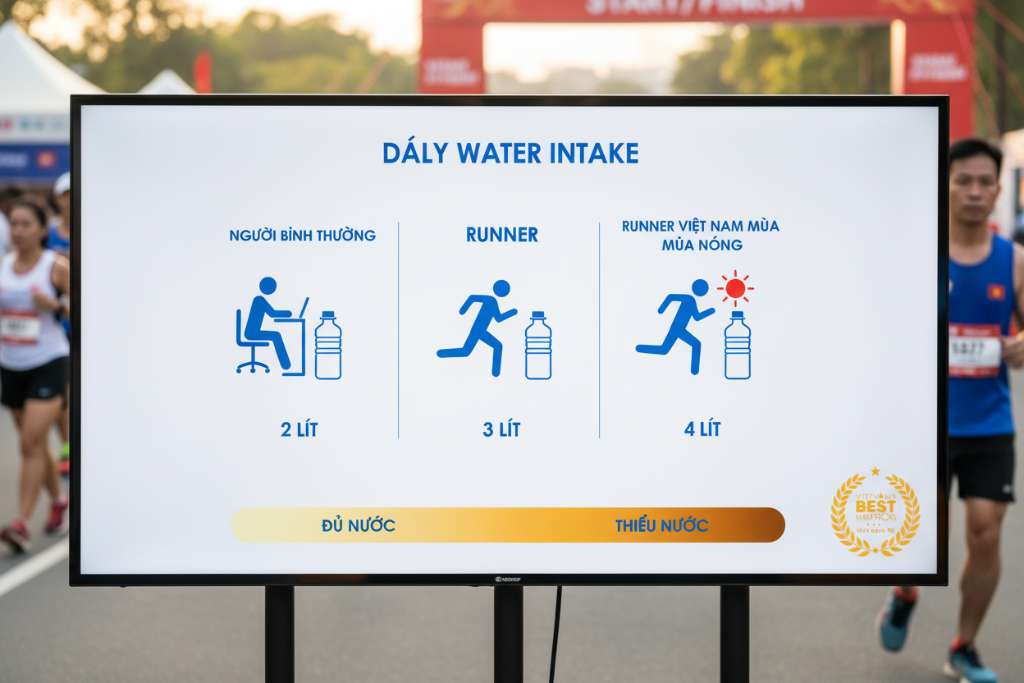
An average adult needs about 2–2.5 liters of water per day. But if you run regularly, this number needs to increase significantly:
| Group | Recommended water intake/day |
|---|---|
| Average person | 2–2.5 liters |
| Runner who trains regularly | 2.5–3.5 liters |
| Runner in a hot, humid climate (Vietnam) | 3–4.5 liters |
In particular, runners in Vietnam lose water 30–50% faster than runners in temperate countries due to the high temperature and humidity year-round. This is why you need to proactively replenish more fluids than average.
A simple way to check: look at the color of your urine. Pale yellow like diluted lemonade means you're well hydrated. Dark yellow like strong tea is a sign you need to drink more right away.
At Vietnam’s Best Marathon, we always remind runners: water doesn't only come from a glass of plain water. Tea, coffee, soup, milk, and water-rich fruits like watermelon, oranges, and cucumbers — all contribute to your total daily fluid intake.
How to Hydrate Properly Before – During – After Your Run
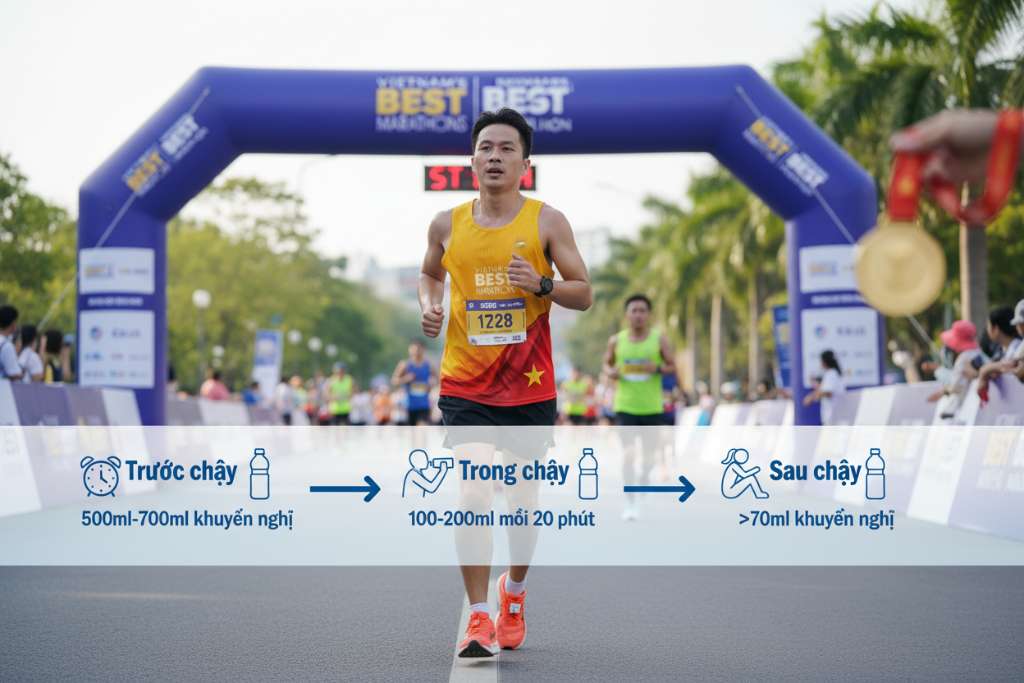
Hydration for runners isn't about "drink when you're thirsty." It's a strategy that should be divided into 3 phases, each with its own goal and amount.
Before the Run (Pre-hydration)
This is the phase many Vietnamese runners skip, especially those who run early in the morning. According to ACSM recommendations, you should drink 5–7 ml/kg of body weight about 2–4 hours before running. For a 70 kg runner, this equals 350–500 ml.
Key principle: drink slowly, in small amounts. Chugging 500 ml at once will only leave you bloated and constantly needing the bathroom. Instead, sip steadily every 15–20 minutes.
If you run at 5:30 a.m., a sensible drinking schedule could be:
- 4:00 — Wake up, drink 150 ml of warm water
- 4:30 — Drink another 150 ml with a light snack (bread + a pinch of salt, or a banana)
- 5:15 — Sip 100 ml before heading out the door
Pairing it with a sodium-containing snack (such as bread with butter and a sprinkle of salt, or a few salted crackers) will help your body retain fluid better instead of passing it straight out as urine.
During the Run
According to the ACSM and the International Society of Sports Nutrition (ISSN), runners should take in about 400–800 ml of water per hour depending on intensity and weather. This is a wide range because everyone sweats differently.
Some practical guidelines:
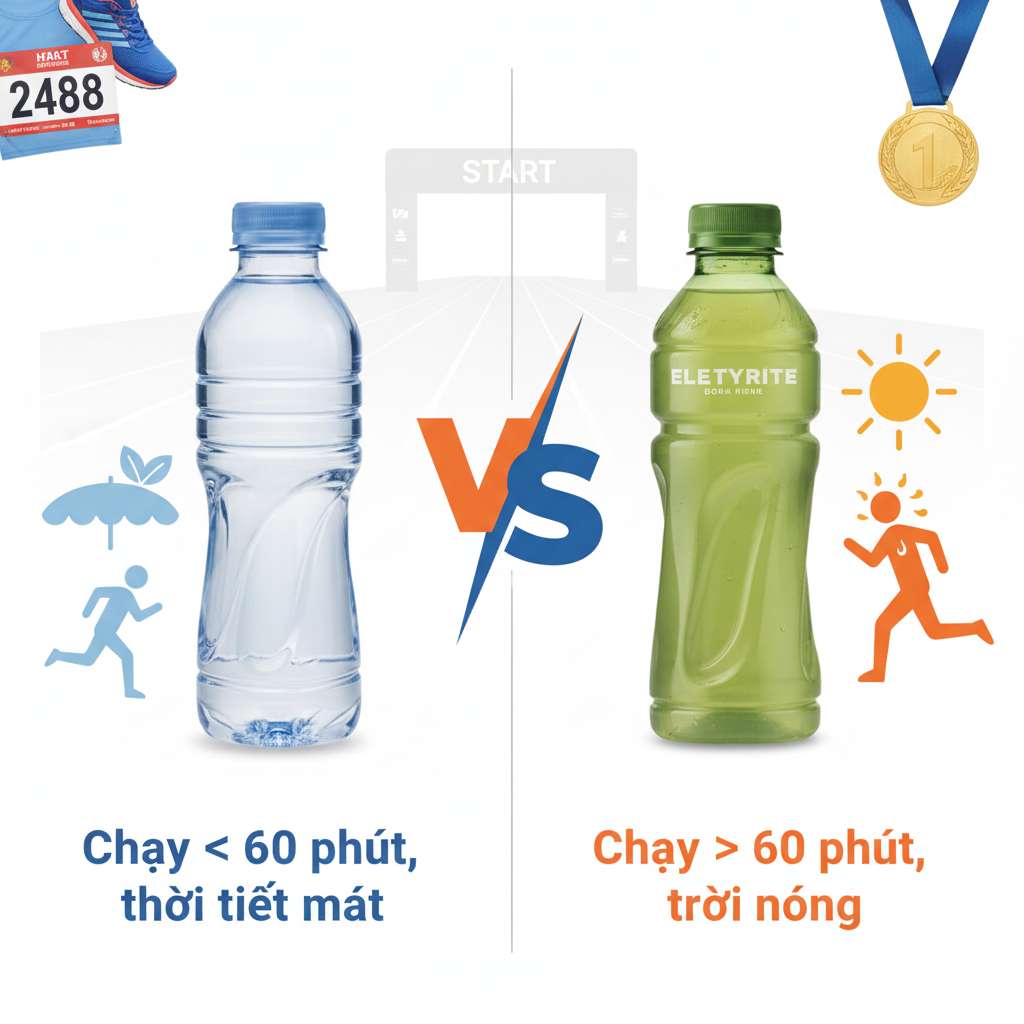
- Running under 60 minutes in cool weather → usually no need to carry water; rehydrating afterward is enough
- Running over 60 minutes → carry water and take small sips every 10–15 minutes
- Never gulp down a whole bottle — your stomach can't absorb it fast enough while you're exercising
A tip from us: set a reminder alert every 15 minutes on your Garmin, Coros, or Apple Watch. When it beeps, take 2–3 small sips. Simple but extremely effective.
After the Run (Post-run Rehydration)
The goal after running is to replace 100–150% of the body weight lost. A simple formula: for every 0.5 kg of weight lost after a run, you need to drink 500–750 ml over the next 2–4 hours.
A concrete example: you weigh 65 kg before the run and 64 kg after → you lost 1 kg → you need to replace it with 1–1.5 liters of water combined with electrolytes and sodium-containing food.
This stage isn't just about plain water. Combining water + electrolytes + salty food (rice with miso soup, phở, or banana + milk) will help your body recover much faster.
Plain Water or Electrolyte Drinks — When Do You Need Which?
This is the question we get asked most by the runner community. The short answer: it depends on your run duration, intensity, and the weather.
When Plain Water Is Enough
If your run is under 60 minutes, at moderate intensity, and the weather isn't too hot, plain water is completely sufficient. A normal meal beforehand already provides the minerals your body needs to function over this period.
Easy runs of 5–8 km in the morning, recovery runs after a hard training day, or treadmill runs in an air-conditioned gym — all fall into this group.
When Electrolyte Supplementation Is a Must
When you run more than 60–90 minutes, the temperature is above 30°C, or you sweat heavily, plain water is no longer enough. At this point your body loses large amounts of minerals through sweat, and 4 key minerals need to be replenished:
| Mineral | Role when running |
|---|---|
| Sodium | Maintains fluid balance, prevents cramps — the most important |
| Potassium | Supports muscle contraction, glycogen storage |
| Magnesium | Energy production, muscle recovery |
| Calcium | Muscle contraction, protects bones and joints |
Imagine you're running a half-marathon at a race in Vietnam in April, with a temperature of 32°C and 80% humidity. Your body loses sodium through sweat at twice the normal rate. If you drink only plain water, you replace the fluid but the sodium concentration in your blood keeps getting more diluted — this is exactly the mechanism that causes hyponatremia.
Golden rule: prioritize electrolyte products with a high sodium content (300–700 mg/liter). Sodium is the mineral you lose the most through sweat.
How to Measure Your Sweat Loss to Know Exactly How Much Water Your Body Needs
All the recommended figures above are averages. But every runner has a different sweat rate. The only way to know exactly how much water your body needs is to measure it yourself.
The sweat rate test procedure is extremely simple, and all you need is a scale:
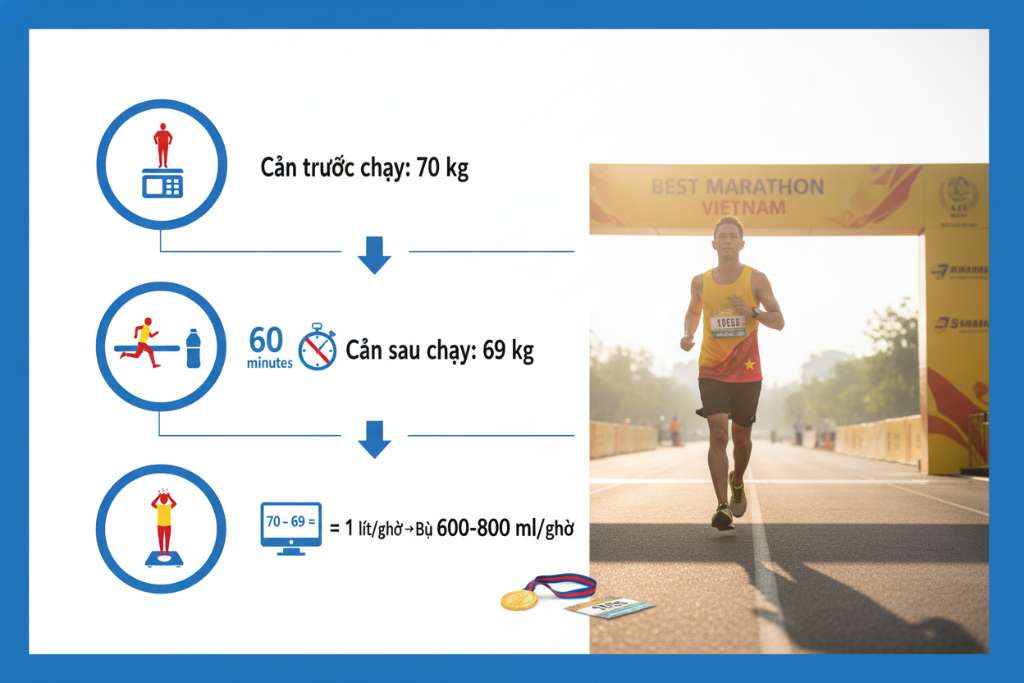
- Weigh yourself before running — without clothes, after using the bathroom
- Run for 60 minutes at your normal training pace — no drinking, no bathroom breaks
- Weigh yourself after running — wipe off the sweat, without clothes
- Calculate: Weight before − Weight after = Sweat lost per hour
Example: you weigh 70 kg before running and 69 kg after → you lost 1 kg = 1 liter of sweat/hour. So you need to replace about 600–800 ml/hour when running in similar conditions.
Important note: sweat rate changes with the season, temperature, humidity, training intensity, and even your fitness level. You should test at least 2–3 times in different conditions, especially in conditions similar to race day.
The new trend for 2024–2025 is using biosensor technology such as the Nix Hydration Biosensor — a biometric patch worn on the skin that tracks sweat composition in real time and sends data to a phone app. Although not yet common in Vietnam, this is the future direction of personalized hydration.
Warning Signs of Dehydration and Overhydration While Running
Knowing the theory is one thing; recognizing the signs in your own body while running is another. Dehydration and overhydration are both dangerous, but their symptoms are completely different.
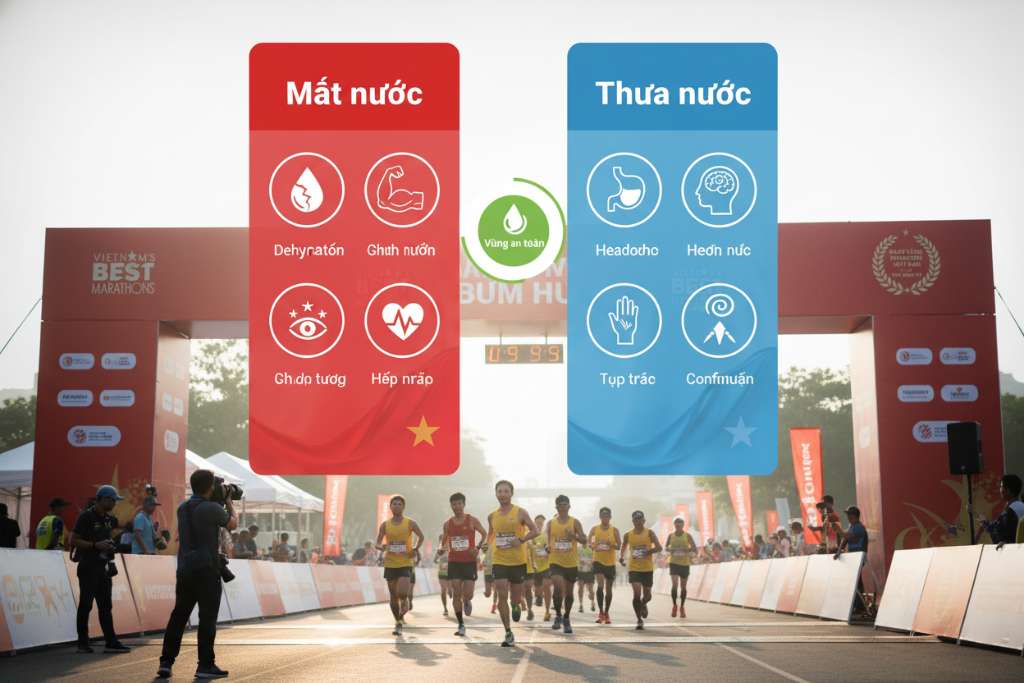
Signs of Dehydration
Your body sends clear signals when you're short on water. Watch for the following signs:
- Intense thirst, dry mouth
- Dark yellow urine or very little urine
- Blurred vision, dizziness, especially when changing pace
- Muscle cramps (calves, hamstrings)
- Abnormally elevated heart rate compared to your normal pace
- Noticeable drop in performance — heavy legs, loss of motivation
Losing more than 4% of your body weight is genuinely dangerous, with a risk of heatstroke and organ damage. If you notice you've stopped sweating in the heat — that's an emergency signal, stop running immediately.
Signs of Overhydration (Hyponatremia)
Few runners know that drinking too much water is just as dangerous. Hyponatremia occurs when you drink too much plain water, diluting the sodium concentration in your blood to a dangerous level.
Warning signs to watch for:
- Nausea and vomiting even though you haven't eaten anything unusual
- A headache that keeps getting worse
- Swollen hands and feet, rings feeling tighter than usual
- Confusion, disorientation
- Weight gain during or after a run (instead of weight loss)
Severe cases can lead to seizures and coma and require immediate emergency medical care. The most common mistake we see: runners joining their first marathon, afraid of dehydration, drink constantly at every aid station — plain water only, with no electrolytes. This is a recipe for hyponatremia.
Hydration for Running in Vietnam — Special Things to Keep in Mind
Every international hydration guideline needs to be adjusted when applied in Vietnam. Our hot, humid tropical climate poses unique challenges that runners in Europe or North America don't face.
With average temperatures of 28–38°C and humidity of 70–90%, Vietnamese runners' bodies have to work harder to cool down. High humidity makes sweat evaporate poorly, reducing natural cooling efficiency and forcing the body to sweat even more — losing additional water and minerals.
Even when running early in the morning from 5h–7h, humidity in Vietnam remains very high. Many runners mistakenly think that cool early-morning runs mean no need to worry about hydration — this is a mistake. Cool but humid conditions still make you lose fluids quickly.
Vietnam's marathon season is concentrated from October to March — the cooler period. But trail running races take place year-round, including summer. Your hydration strategy needs to change with the season:
- Cool season (November–February): Replenish fluids at 400–600 ml/hour, alternating between plain water and electrolytes if you like
- Hot season (April–September): Increase to 600–800 ml/hour, prioritize electrolyte drinks, and pre-hydrate more thoroughly
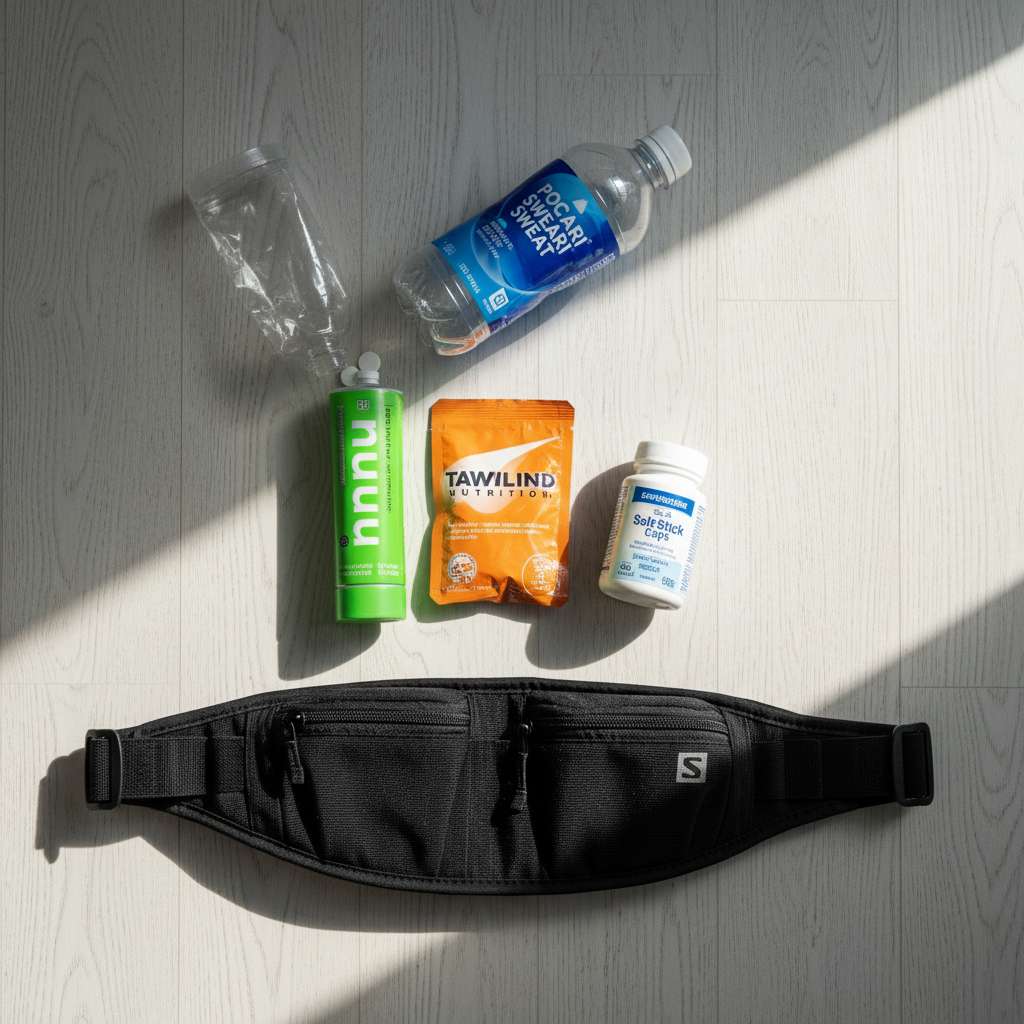
Electrolyte products easy to find in Vietnam include Pocari Sweat, Revive, Aquarius (available at convenience stores), or Nuun effervescent tablets, Tailwind powder, and SaltStick capsules (order online via Shopee, Lazada).
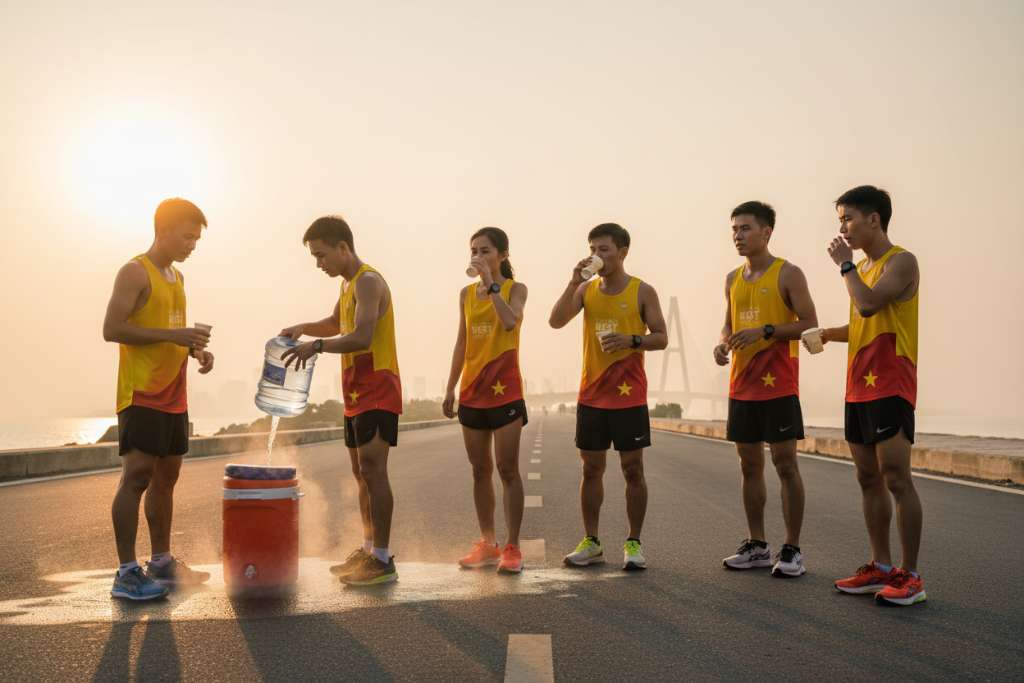
Popular Hydration Products for Runners — Which One to Choose?
The hydration product market today is very diverse, from a few thousand dong for a bottle of Pocari Sweat to several hundred thousand for a box of imported effervescent tablets. The issue isn't expensive versus cheap, but choosing the right type for the right situation.
Popular forms of electrolyte products:
- Effervescent tablets (Nuun, GU Hydration) — convenient, light, easy to carry, dissolve quickly
- Powder mixes (Tailwind, Skratch Labs, Maurten) — combine energy and electrolytes, suited to long runs
- Capsules (SaltStick Caps) — the most compact, swallowed with water, ideal for race day
- Chewables (SaltStick FastChews) — fast absorption, use when you need a quick top-up
- Sports drinks (Pocari Sweat, Revive, Aquarius) — convenient, cheap, available everywhere
Hydration combo suggestions for 3 common situations:
| Situation | Suggested products |
|---|---|
| Morning 5–10K run | Plain water or 1 pre-mixed Nuun effervescent tablet |
| Half-marathon | Tailwind powder mixed in a bottle + 2 backup SaltStick capsules |
| Ultra-trail / Marathon | Powder mix in a vest bottle + a SaltStick capsule every 45–60 minutes + plain water in between |
The most important rule: NEVER try a new product on race day. Everything — from the brand and mixing concentration to the timing of when you drink — must be tested in earlier training sessions. Your stomach is very sensitive while running, and everyone reacts differently.
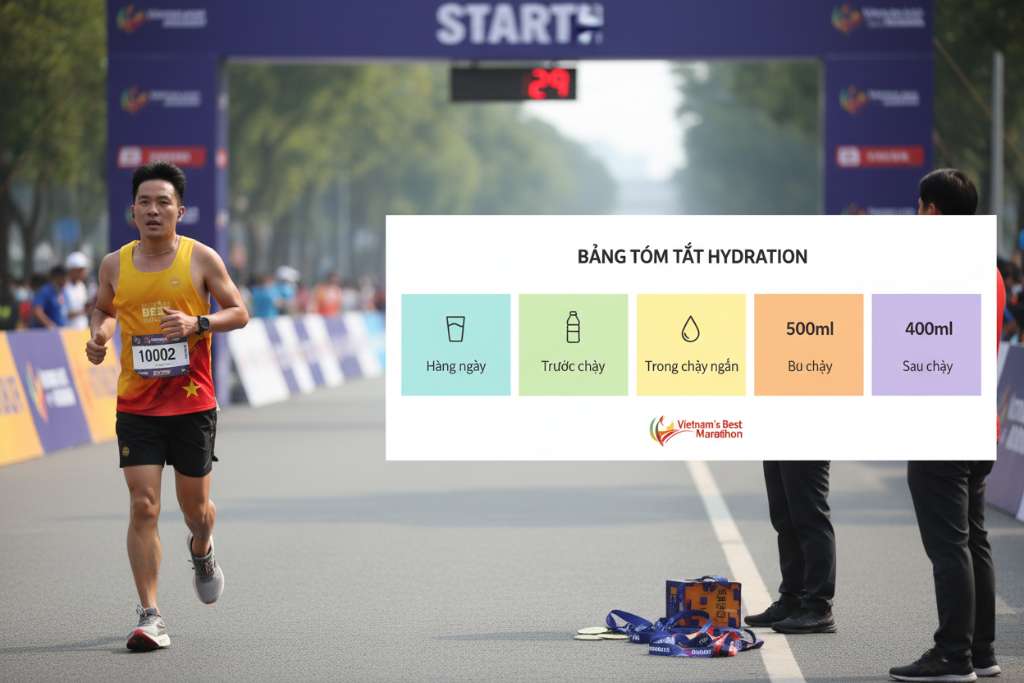
Summary Table — What to Drink, How Much, and When
If you only have 30 seconds, save this table to your phone:
| Timing | Amount | Type of fluid | Notes |
|---|---|---|---|
| Daily | 2.5–3.5 liters | Plain water, tea, fruit juice | Add 0.5–1L more if it's hot |
| 2–4h before running | 350–500 ml | Water or water + electrolytes | Drink slowly, in small amounts |
| During runs < 60 minutes | Not required | — | Rehydrating after the run is enough |
| During runs > 60 minutes | 400–800 ml/hour | Water + electrolytes | Sip every 10–15 minutes |
| After the run | 500–750 ml / per 0.5 kg lost | Water + electrolytes + salty food | Rehydrate within 2–4 hours |
Take a screenshot of this table or come back to it anytime on Vietnam’s Best Marathon.
Conclusion
How much water should you drink when running? There is no single number that fits everyone, but there are 3 principles to remember: get enough fluids every day, split your hydration strategy into 3 phases (before – during – after), and measure your own sweat rate to personalize it. Listen to your body, monitor your urine color, and don't be afraid to experiment in training. If you found this article helpful, share it with your running group. Visit Vietnam’s Best Marathon for more in-depth running guides.
Frequently Asked Questions (FAQ)
Do I need to drink water before a morning run?
Yes. After 6–8 hours of sleep, your body has lost water through breathing and skin. Drink 200–300 ml of water as soon as you wake up, at least 15–30 minutes before running. If you're running longer than 60 minutes, you need to pre-hydrate more thoroughly with 350–500 ml over the 2–4 hours beforehand.
How much dehydration affects running performance?
According to the ACSM, losing just 2% of your body weight through sweat can reduce running performance by 10–20%. Losing more than 4% of body weight starts to endanger your health, including the risk of heatstroke and organ damage.
Is drinking too much water while running dangerous?
Very dangerous. Drinking too much plain water without replenishing sodium can cause hyponatremia — a condition in which blood sodium levels drop to a dangerous level. Symptoms include nausea, headache, confusion, swollen hands and feet, and in severe cases seizures or coma.
Do I need to carry water when running less than 30 minutes?
Usually not. For a short run under 30 minutes, your body already has enough stored water if you drink enough throughout the day. Just rehydrate after the run. Exceptions: if it's very hot, above 35°C, or you know you're a heavy sweater.
What should I drink after a run to recover quickly?
Combining water and electrolytes is best. You can use an electrolyte drink (Pocari Sweat, Nuun effervescent tablets) along with food containing sodium and carbs. Chocolate milk is also an option that many studies have shown to be effective for recovery thanks to its suitable carb-to-protein ratio.
Original article: bestmarathon.vn